

José Raúl Capablanca
José Raúl Capablanca · Cuba · 1888
The man they called the "chess machine"; someone who didn't lose a single game for eight whole years.
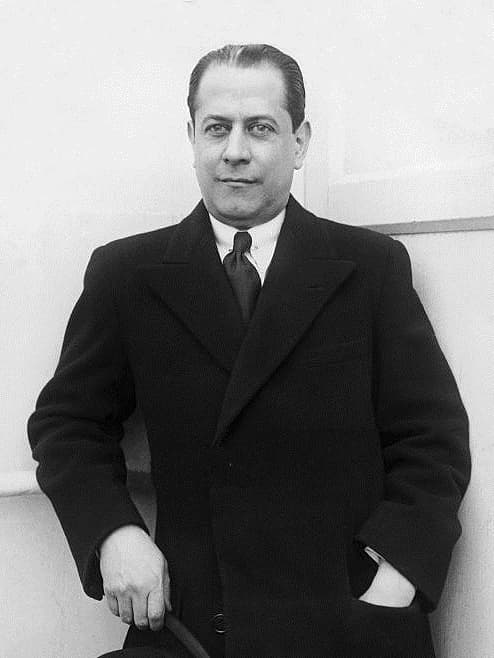
Photo by Keystone-France (عکاس ناشناس) · مالکیت عمومی (Public Domain) · Wikimedia Commons
A little boy who became a chess player by watching
José Raúl Capablanca was born in 1888 in Havana, Cuba. The story of how he learned chess is one of the most legendary in the game's history: no one ever taught him the rules; at the age of 4, just by watching his father (a military officer) play at home, he learned how the pieces move by himself. One day, when his father made an illegal knight move, 4-year-old Capablanca noticed and corrected him; which made his father realize with astonishment that his son knew the rules completely without anyone teaching him.
That natural, self-taught talent set Capablanca apart from the rest of history's champions from the very beginning; while most chess geniuses were developed over years under professional coaches with deep study of theory, Capablanca reached a deep understanding of the game almost instinctively and without formal training; which later led many experts to call him "the most natural genius in chess history".
An eight-year unbeaten record
Capablanca progressed at an incredible speed. At 13 he beat the Cuban champion, and his fame began. But what made his name immortal is an almost unbelievable record: between 1916 and 1924, nearly eight whole years, Capablanca didn't lose a single official game! That record, even today with powerful chess engines that players train with, is still one of the most unbelievable achievements in the game's history.
That incredible level of accuracy and error-free play is why people gave him the nickname "the chess machine"; as if Capablanca never made mistakes at all. His games, instead of complex, flashy tactics, were full of simplicity, clarity and geometric precision; as if he knew in advance exactly where to place his pieces.
That eight-year record was finally broken in 1924 at a big tournament in New York, when Richard Réti, a Czech grandmaster, managed to beat Capablanca. Interestingly, that loss was so unexpected that when the news spread through the chess halls, many of those present at first didn't believe it and thought it was a joke; so much had Capablanca's invincibility in that era become an almost mythical belief.
The world championship and the start of an end
In 1921 Capablanca finally managed to beat Germany's Emanuel Lasker, the reigning and experienced world champion, and became the third world champion in history. The victory was a great national honor for Cuba and all of Latin America, because it was the first time a non-European reached the title. After his championship Capablanca was also extremely popular; his charming personality, elegant appearance and aristocratic lifestyle made him one of the most famous public figures in the sports world of that era.
But in 1927, as we said in Alekhine's story, Capablanca lost his crown to Alexander Alekhine in a long, draining match in Buenos Aires; a defeat that was completely unexpected for Capablanca and his fans, because everyone thought the "invincible machine" would never lose.
One reason many chess historians give for that unexpected defeat is Capablanca's own excessive self-confidence; he was so sure of his natural superiority that, unlike Alekhine, he did no deep, dedicated preparation for that particular match. That bitter lesson later became one of the most important warnings in professional chess history: even the greatest geniuses, without serious preparation, are at risk of losing.
Fear of the death of chess
One of the most interesting and least-known parts of Capablanca's life was his strange worry about the future of the game of chess itself. He believed that with the advance of chess theory and the rising level of professional players, all high-level games would soon end in draws and classical chess would no longer be appealing to spectators; a phenomenon he called the "slow death of chess". To solve this problem, Capablanca even proposed a new version of chess called "Capablanca Chess" with a bigger board and extra pieces to make the game fresh and challenging again; an idea that was never widely accepted but showed his creative, forward-looking thinking.
A politician and diplomat
Besides chess, Capablanca was also an official diplomat of the Cuban government and served in various embassies around the world. That diplomatic job let him take part in major tournaments around the world alongside his official duties; an interesting mix of an artistic-sports life and a political one that was completely unusual at the time.
Capablanca's social, charming personality, along with his diplomatic job, made him well known in the upper circles of European and American society; he was friends with many politicians, artists and intellectuals, and those relationships turned the image of chess from a purely academic game into a high-level cultural and social activity.
A quiet end, right in the middle of a game
In 1942, at the age of 53, while watching other people's game at the Manhattan Chess Club in New York, Capablanca suffered a stroke and died a few days later. His death happened right in the middle of the chess world he loved; perhaps the most fitting end possible for a man who had devoted his whole life to this game.
News of his death quickly spread through all the chess circles of the world, and even Alekhine, his longtime rival with whom relations had been cold and tense for years, expressed deep regret in an official message and wrote that the chess world had lost one of its brightest stars. That reaction showed that, despite all personal disputes, Capablanca's greatness was something even his fiercest rival couldn't ignore.
A legacy that is still alive
Today, more than eighty years after Capablanca's death, his games are still one of the main learning sources for endgames and simple positions. The famous book "Chess Fundamentals", written by Capablanca himself, is still on the list of the best chess instruction books in history, and successive generations of chess players, from beginners to grandmasters, have learned chess from it.
Many cups and tournaments around the world, especially in Cuba and Latin America, have been named in Capablanca's honor and are held every year. Even today, when chess coaches want to teach their students how to see a position simply and clearly, they often pick Capablanca's games as the first example; an educational legacy that may even outlast his world championship title itself.
A personality who loved life
Unlike many other champions whose lives were devoted entirely to chess, Capablanca was also a social man who loved life; he loved lavish parties, travel and socializing with prominent figures, and that aristocratic lifestyle created a special, appealing image of him in the minds of people of that era. Newspapers presented him not only as a sports champion but also as an elegant, charming social figure.
That lifestyle sometimes clashed with serious preparation for tournaments, as we saw in the story of his loss to Alekhine. But that same combination of natural genius, social charm and high self-confidence has made Capablanca one of the most lovable and memorable figures in chess history; someone who showed you can be both a genius and enjoy life.
Why should we study Capablanca's games?
If you want to learn how to play chess simply, clearly and without unnecessary complication, Capablanca is the best possible teacher. His clear, natural style, even after more than a hundred years, is still one of the best learning sources for understanding the basic principles of chess. In Shatrino's Masters' Games section you can replay several of Capablanca's historic games.
Replay José Raúl Capablanca's real games
In Shatrino's masters' games section, several of José Raúl Capablanca's real games are available; replay them move by move.
Go to masters' games